
 It’s not easy to put your head above a parapet: there is a risk of being shot and wounded.
I know that if I had been in the trenches in the war I’d probably have hidden away in a corner. I’m not brave. I like to be agreeable and I like to be liked: it can be a strength at times and a weakness as well. I worked out very early on in school that being on the outside of a group is horrible and lonely and so I made sure to fit it, to agree with the majority, and to keep my head down in arguments.
But now I feel that I need to stand up, lift my head up and be braver: a belated new year’s resolution perhaps?
For as long as I can remember the church that I belong to and love has been discussing and debating whether or not LGBTI people can be fully accepted into the family of God, and whether their relationships can be fully acknowledged and blessed. This debate has been trundling on for years and just as we seem to be at the stage where just as we are beginning to listen to one another and be getting somewhere, we then seem to take enormous steps back and hurt each other once again.
The Bishops of the Oxford Diocese wrote a measured, loving and pastoral letter to all 1,500 ministers of our Church in October: you can read the letter here. It called for an attitude of inclusion and respect towards LGBTI people whilst further discussions take place; it recognised that many LGBTI men and women are priests working hard to further the Kingdom of God in their churches and communities, and that we are all part of the same family; and it called for us to be ‘clothed with compassion’ in the way in which we conduct ourselves. It seemed to be one giant step forward.
And so yesterday we read a letter signed by 104 mainly evangelical church leaders which seems to take us right back to the beginning again. You can read it here.
There are three things I want to say about this letter which have moved me to say something.
Firstly, the language is overly inflammatory and dramatic: they are ‘dismayed’, ‘disturbed’, ‘concerned’, the situation is ‘serious’ and ‘a tragedy’. Really? Is it really a ‘tragedy’ if we prayerfully look at scripture and come to different conclusions? Many of us disagree over female priests, but would we say it’s a tragedy that a female priest like me is working among students in Oxford and showing them the love of God each day? Or is it a tragedy when I offer the sacrament of marriage to couples who have been living together and clearly enjoying sexual intimacy before they tie the knot? Why then, do we use this language to describe a difference of opinion when it comes to same-sex relationships? The tragedy surely is that we are willing to split apart a family because we can’t agree to disagree.
Secondly, the letter assumes that LGBTI Christians haven’t done any of their own theological study, prayerful reflection, repentance and soul searching. They write of the sacrament of Baptism and the Eucharist being for ‘the community of faith’, and cite St Paul’s teaching which, they say: ‘clearly discourages participation in the Lord’s Supper for those who have not examined themselves’. Are they saying LGBTI brothers and sisters are not part of the community of faith? Or are they not part of the community of faith when they fall in love with someone? Or does this non-acceptance happen when they express this love sexually? At what point do they think LGBTI people should be excluded from the Lords table I wonder?
And my final point is one that is far better expressed by Marcus Green is his blog ‘A Possibility of Difference’ which you can read here. The letter ends with this threat:
we would ask them (the Bishops) to recognise the seriousness of the difference between us: advocacy of same-sex sexual intimacy is either an expression of the love of God or it creates an obstacle to people entering the kingdom of God. It cannot be both. The situation is serious.
I always thought the Kingdom of God was entered into through the gift of Grace in Jesus Christ, and that all we need to do is accept that gift. That’s the message I get when I read my bible. That’s the message I tell to those who come to my services each Sunday.
As Marcus says:
All have sinned – but sin doesn’t create an obstacle to anyone entering the kingdom of God. We do not pull ourselves up by out bootlaces into the kingdom of God. We cannot. If we think we can, or think others should, Christ died for nothing.
Now to put my head above the parapet. I dearly hope that one day sexual intimacy between two human beings of the same sex will be blessed and hallowed by the Church that I love. And I don’t think that because I’m a ‘liberal’ who doesn’t really care about the gospel, although I’m sure that’s how some will view me. I think that because I’ve read, thought, studied, prayed, spoken to people, and reflected about this over the last 20 years. According to those who have signed this letter I’m now no doubt guilty of ‘advocacy of same-sex intimacy’ and so have put an obstacle in my way to enter the kingdom of God. They can think that if they like.
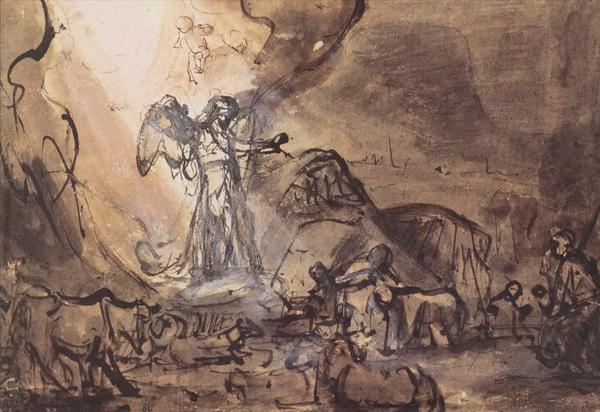
Thankfully I know that Jesus loves me and on Sunday I will preach that love of God to those students in my care (gay, straight, questioning) as we stand to affirm our baptism vows and remember the words from Luke’s Gospel:
‘you are my Son, the beloved; with you I am well pleased’
 Consider the Lilies - Clare Hayns