Jochebed: a tale for Mothering Sunday

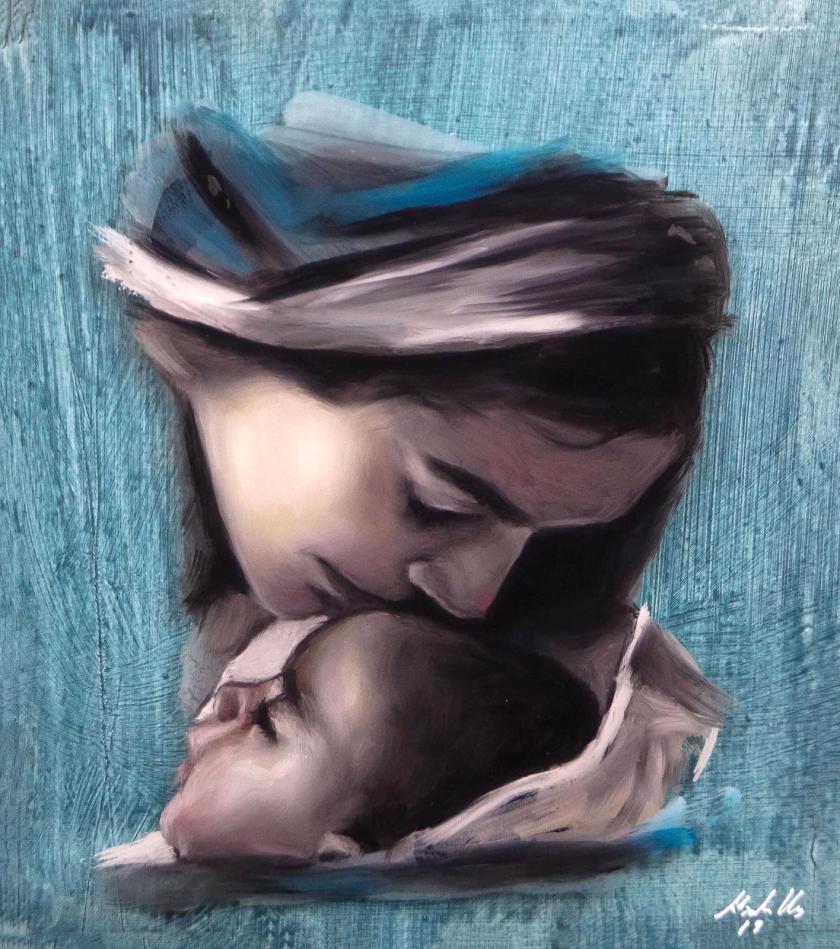
Magnificat by ©micahhayns

Exodus 2

Moses is no doubt the most important prophet in Judaism, and one of the most significant for Christianity and Islam. He led the Israelites out of Egyptian captivity, was given the Ten Commandments thereby establishing Jewish law, and he is believed to have been the author of the Torah, the first five books of the bible. However, without the bravery of several women, he may never have made it beyond the first few months of life. There was the bravery of the midwives (Shiprah and Puah) who prevented infanticide, and now we learn of how his mother (Jochebed), sister (Miriam) and an Egyptian princess came together in an extraordinary way to protect his life.

Having a baby at the time of war or persecution must be a terrifying ordeal, one that millions of women encounter every year – we have all seen with horror the images of pregnant women fleeing bombing in Ukraine. The situation for Jochebed and her child was dire. The Pharaoh had issued an edict to murder all the Hebrew baby boys by throwing them into the River Nile and Jochebed had given birth to ‘a fine baby’ at this dangerous time.

Jochebed was one of Levi’s daughters, therefore was one of Jacob’s grandchildren.  She was married to Amran and had two older children, Aaron and Miriam. She had successfully hidden her new-born baby for three months but this was becoming impossible and so she needed another plan. She created a basket out of reeds, waterproofed it with a plant resin and took the ‘moses basket’ and hid it near to the place the wealthy women bathed in river. Her daughter Miriam was stationed to watch over the baby, and I imagine both mother and daughter prayed earnestly to God for his protection. They could not have imagined in their wildest dreams that his salvation would come from the very place that also posed the greatest risk to his life.

Pharaoh’s daughter Bithia was bathing in the river alongside her entourage and she spotted the baby in the reeds. If she had followed her father’s rules she would have been obliged to hand him over to the authorities. What she did was far more risky. Realising he was a Hebrew baby she took pity on him and decided to adopt him. He was still breastfeeding and, in an extraordinary twist and an answer to Jochebad’s prayers, Miriam, who had been watching all this unfold, stepped forward and offered to find a ‘wet-nurse’ for the baby. So Moses’ own mother was paid to look after her child until adulthood, presumably from the safety of the royal palace or its surroundings.

Reflection

We can imagine Jochebed’s joy at the return of her beautiful son and the delight that they could now live in safety without fear. It’s Mothering Sunday in the UK and this story reminds us of the sacrifices made by mothers through the ages. Many of these acts are unremarkable and go unnoticed, such as those who take two jobs or who put their careers on hold for a time. Sometimes the sacrifice is costly. I remember meeting a woman whilst working for a homeless charity who offered up her child for adoption as she knew she wouldn’t be able to have looked after him. Her decision was painful and was clearly made out of a deep love for her little boy. This story also reminds us that the care of children is so often done by a community working together, and so we think of all the foster parents, respite carers, nannies, and siblings who so often take on these caring roles to help children thrive.

Prayer

God of Miriam and Jochebed,
you care for those the world forgets
and you never forget the needs of your people.
Be present with all who make agonising decisions;
protect children who have nobody to protect them;
bless those who foster, adopt and take care of children;
and may all teh members of your family
live for one another in self-giving love. Amen


International Women’s Day – Tuesday 8th March

Daughters of Zelophehad by ©MicahHayns

On this day where we celebrate International Women’s Day, I’d like to remember the wonderful women of the Old Testament who have accompanied me over the past few years as I worked on our book ‘Unveiled’. Seeing them listed in this way reminds me that God has been working through wonderful women for centuries, and continues to do so.

These women remind us:

Eve, that we all stuff up, but God has a plan;
Hagar, that outsiders are seen and heard by God;
Sarah, that dreams can come true even when we feel past it.
Lot’s Wife, that women are fleeing from their homes because of war right now.
Rebekah, that parenting is difficult and it’s OK if we get it wrong;
Rachel, that even being loved by a man is sometimes not enough;
Leah, that it’s really tough when we feel marginalised and unnoticed.
Dinah, that women aren’t defined by the worst thing a man did to them.
Potiphar’s Wife, that God can work through sexy women;
Tamar, that sometimes it’s best to push forward and demand to be noticed;
Shiprah and Puah, that civil disobedience can sometimes save lives;
Jochebed, that we should never give up hope;
Miriam, that there is always time to dance and sing with joy.
Mahlan, Noah, Hoglah, Milcah and Tirzah (the daughters of Zelophehad), that sometimes when you speak up against injustice, change happens.
Rahab, that the genealogy of Jesus names a prostitute and so no one is ‘not good enough’;
Ruth, that at times friendship is the most precious thing in life;
Naomi, that even the most bitter and bereaved can be restored to wholeness.
Deborah, that at times we need to listen to the wise women in our community;
Jael, that some women have to take up arms and fight for freedom;
The First Mrs Samson, that marriage really isn’t the best option for some women;
Delilah, that power isn’t always about being strong.
Jephthah’s Daughter, that sometimes the people we love the most can hurt and harm us;
Bathsheba, that women are too often shamed and blamed for men’s actions;
Hannah, that our prayers from the heart are heard.
Michal, that love isn’t static and can change over time;
Abigail, that many women today are keeping the peace between feuding men;
Rizpah, that warfare leads to too many grieving mothers;
The Medium of Endor, that just because you can do something doesn’t mean you should;
Queen Vashti, that saying ‘no’ to powerful men is costly;
Esther, that sometimes we’re in just the right place at the right time.
Abishag, that even the most lowly of jobs can be important;
Jezebel, that our reputations don’t define us;
Huldah, that at times telling the truth means giving ‘bad news’;
Suzannah, that some women aren’t believed when they tell the truth;
Queen of Sheba, that seeking knowledge is a good thing.
The widow of Zarephath, that being generous with little can lead to abundant blessing;
Naaman’s maidservant, that the courage of the smallest can have profound consequences;
Athalia, that not all women have redeeming qualities, and that’s OK;
The Shunamite Woman, that at times we have to be feisty to fight for those we love;
And finally, Shallum’s daughters, that women are always part of the story, even if they’re not named or remembered by our history books.

Happy International Women’s Day!


Unveiled Videos

We are delighted to share the news that BRF (Bible Reading Fellowship) has worked with us to produce eight videos to accompany our book Unveiled: women of the Old Testament and the choices they made. These will be available from March 2022 with accompanying resource material. Each video will be released weekly from March 3rd.

Each video will be around 5 minutes each and there will be downloadable questions to aid discussion groups.

You can find each session with the links to the films and resource material here: https://www.brf.org.uk/unveiled/

Introduction Video

Eve: the first choice

Eve: the First Choice

Naomi: bittersweet

This post is part of a series on forty women from the Old Testament originally written for Lent 2020. It is now published by BRF as Unveiled: Women of the Old Testament and the choices they made.

The Book of Ruth

The ‘Bechdel Test’ is a measure of the representation of women in fiction and film and asks these three questions: does this feature at least two women; do the women have a conversation with each other; is that conversation about something or someone other than a man? It’s remarkable how many fail this simple test! The Book of Ruth passes the Bechdel Test. It is one of only two books of the bible named after a woman (the other being Esther), and it is a story that tells of the power of a deep, sacrificial relationship between two grieving women, Naomi and Ruth, and of their journey of friendship, faith and healing.  

Naomi and her husband Elimelech lived in Bethlehem in Judah with their two sons, Mahlon and Chilion, at a time when Israel was ruled by the Judges (probably Gideon.). When a famine hit the region, Elimelech decided to move his family to Moab, a land on the other side of the Jordan with a non-Jewish population. He died soon after arriving and the sons took Moabite wives and settled. Tragedy struck again and both sons died leaving Naomi’s world devastated. It is akin to the tragic blows faced by Job, but Naomi’s situation is further exacerbated because she is a woman without the protection of a single male family member, and she is in a foreign land far from her extended family.

It isn’t surprising then that Naomi decides to return home to Bethlehem, particularly as she had heard the famine was over. Her two widowed daughters-in-law, Ruth and Orpah, both began the fifty mile journey with her, but at some point along the way Naomi realised that taking these women far away from their own people would be the wrong thing to do. As they were still young there was still some hope for them and their future. She encouraged them to return to their families, to find new husbands, and rebuild their lives. Naomi had no such hope for herself. She believed God had turned against her and her pain was so deep rooted she even asked for her name to be changed from Naomi (which means delight) to ‘Mara’ (‘bitterness’).

After a great deal of persuasion Orpah tearfully turns back to join her family, but Ruth refuses to leave Naomi and ‘clung to her’. (Ruth 1.14) Naomi eventually relented and the two widows make their way together back to Bethlehem, where they arrived in time for the harvest. Ruth went to work in the fields gleaning, harvesting the wheat reserved in the Torah for widows, and the pair began the slow work of healing. This takes time for Naomi, but the dual balm of steadfast commitment alongside the practical support offered her by her daughter (as she now saw her) began to bring signs of hope that the bitterness was melting. One of these signs was the energetic support Naomi gives Ruth in securing a husband, Boaz, a match that would ensure the land lost by Elimelech’s death would be restored to the family.

This wasn’t all that was restored to Naomi. By the end of the book she had a secure home, a daughter who loved her, and a grandchild. She also had the respect and blessing of her community, and above all this, her faith in God.

Reflection

What is so lovely about Naomi and Ruth’s relationship is that their friendship seems to be without the rivalry and jealousy that we’ve seen in some of the other female relationships so far. There is a mutual reciprocity at the heart of it – Naomi relies on Ruth’s youthful energy to provide food for them, Ruth relies on Naomi’s wisdom and contacts in a strange land, and they walk together in their grief.

Friendships like this are a gift aren’t they? Let’s give thanks for them.

Prayer

Loving God, we thank you for the joy and comfort of friendships:
for those who have been their through the ups and downs of life;
for those who have walked beside us even when we’ve not
been great company; and for those friends who are no longer with us and who we long to meet again. Amen

This Precarious Faith

Last week I was able to go on a retreat to St Bueno’s, a wonderful Jesuit retreat house in North Wales. In the main chapel, there is an altar that rests on large boulders. It inspired me to write this poem.

The altar at St Bueno’s, St Asaphs, North Wales

This precarious faith
Teetering
Balancing on the boulders
of fears, doubts and wanderings.

One strong push and it’s scattered
The table toppled
and all that was stable
broken. In pieces.

Wondering if we should pick up
the rocks and throw,
hurl and shatter.
It feels so weak.

This precarious faith
Balancing
Resting on the boulders
of the one who gathers, mends, and makes whole.

©Clare Hayns, January 2022


Window in the Rock Chapel, St Buenos by Claire Mullholland

Wall Building with All the Saints

Nehemiah 3. 6-12
Revelation 21.

Daughters of Shallum @MicahHayns

From a sermon preached at College Communion at Christ Church
All Saints Sunday 2021

‘Shallum, son of Hallohesh, ruler of a half district of Jerusalem, repaired the next section with the help of his daughters’

Nehemiah 3.12

All Saint’s Day is an opportunity to think about the Church in all eternity. Where all time is one and all time is God’s time, so we are part of one Church which is here and everywhere, a Church that stretches back to include all people, a body of Christ that stretches back into the past and on into the future. It’s a mind-bending concept.

So let’s focus right back to into Old Testament, to two stories of two different groups of sisters, one from the book of Numbers and the other from one brief mention in the book of Nehemiah. Stories over 1000 years apart and over 1000 years from where we are now.

There are several reasons to focus on their stories:
Firstly, I’ve been emersed in stories of Old Testament women for the last few years as I’ve been working on a book on women from the OT and have been so inspired that if I get a chance to share their stories I want to take it; and secondly, because I think they have something to teach us and their stories can inspire us.

The first group of sisters (Numbers 27) are Mahlan, Noah, Hoglah, Milcan and Tirzan: the five daughters of Zelophehad, an Israelite from the tribe of Manasseh. The period was when the Israelites tribes were being led by Moses in the desert and had been in the wilderness for many years and they were about to enter the ‘promised land’ and claim their land.

Zelphehad had died. He only had sons, no daughters. The custom was that in that case the land of the deceased would pass over to another clan and Zelphehad’s name would die with him.

His daughters thought differently. They ‘came forward’ and bravely went to the tent of Moses and the gathered elders to argue their case. Their reasoning was forthright, concise, personal, and persuasive and ended with the plea:


‘why should the name of our father be taken away from his clan because he has no son?’.

Numbers 27.4

Moses didn’t know how to answer them so he prayed about it and heard from God.

‘the daughters of Zelophehad are right in what they are saying’.

Numbers 27.7

The daughters were right! The law was changed and from then on daughters could inherit at the death of their father. They were also allowed to choose their own husbands as long as they were from the same clan. This move transformed their lives (they eventually inherited the land as detailed in Joshua), but also transformed the lives of women down the centuries.

The other story of a group of sisters is just mentioned in one line in the book of Nehemiah, chapter 3.11 We don’t know their names, they are simply ‘Shallum’s daughters’.

The time period is many centuries later. Judah had been invaded by the Babylonians and the city of Jerusalem, including its palaces, the Holy Temple, and the grand City walls had all been destroyed. The Jewish people had been exiled for nearly a hundred years and had been given permission to return by King Cyrus of Persia.

Everything had been destroyed and so there was a huge amount of building work to do to restore the house of God, restore the holiness of their people and restore the city walls. Nehemiah 3 is a long list of all the people who helped in this restoration. The whole community gathered together to build sections. It was hard labour.

And in amongst the long list of fathers and sons are Shallum’s daughters working alongside them all to rebuild the wall.

What strikes me about these two stories is they both speak of the power of working together to bring about transformation and change. The Daughters of Zelophehad wouldn’t have been listened to on their own. They needed to go as a group to Moses’ tent. The wall builders each had their section to complete; they had to work together and focus on their little section of the whole.

The reading from Revelation 21 also speaks of a rebuilt city – the vision of a new heaven and a new earth, the holy city, the new Jerusalem, a city where:

‘Death will be no more;
mourning and crying and pain will be no more,

Revelation 21.4a

The old city of Jerusalem was destroyed with its temple. Jesus, likened himself to the temple that would be destroyed but rebuilt in three days. And we, with all the saints past and present, are called to be his temple, his resurrected body, in the world and to be part of the building project of this new kingdom.

There is much rebuilding to be done, the problem is often where to start. There are so many issues today in our church and society – it can become overwhelming to know what to focus on.

Gender equality is still an issue today – land rights for women are a UN sustainability goal; there is environmental work to be done, we think of Cop 26 this week; there is homelessness, food poverty.. the list goes on.

We each have a section of wall to rebuild. This is different for each of us. Each of us will have the thing that stirs us to go the tent to speak out. What might that be?

So often church people waste time critiquing other saints’ wall building methods, or comparing their own section with either pride or dissatisfaction. We don’t need to do that.

On this All Saint’s Day we join with the body of all believers, past and present. May we be like the daughters of Zelophehad as we link arms and speak up against injustice where we see it. May we be like the daughters of Shallum as we pick up our tools and focus on rebuilding our little area of wall.

So often it can feel as if our hard labour isn’t achieving anything much at all. But it is. It is part of something bigger. Sometimes we are just building foundations that other saints build on; at other times it’s making small repairs to peoples’ lives which are hardly noticeable. But it all matters.

We don’t do any of this on our own of course. We do this in community, and through the power of the Holy Spirit, and in the company of all the Saints.

Amen

.

NEWS: book coming out on Friday!

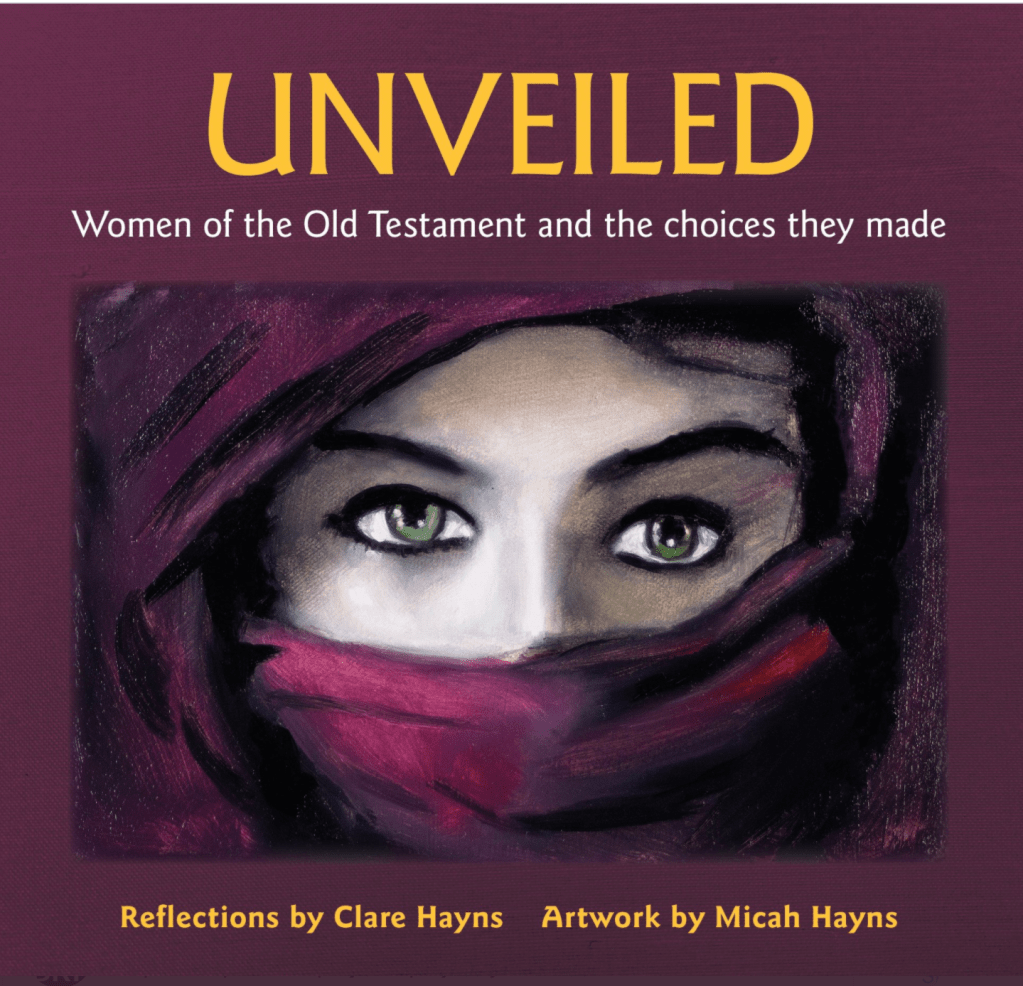
We are delighted to announce that our book ‘Unveiled: women of the Old Testament and the choices they made’ will be in UK shops this Friday 22nd October.

We’re really happy with the beautiful design and lay out and can’t thank BRF enough for all their help in taking this forward and turning it from a dream to a reality.

Micah has worked really hard to create 40 original paintings and drawings which bring out the character and emotion of each of the women. Each one is unique and all of them are different to the images he created for the Lent 2020 blog. We would love the opportunity to talk about the book and display (and sell) the artwork and so if you are interested/have ideas then please get in touch (haynsclare@gmail.com).

We really hope you will support us by buying copies, recommending them to your friends, and spreading the word. It all started here on this blog and so we can’t thank you enough for your support. They should be in all major bookshops and outlets from Friday. If you live near a small local bookshop, perhaps you could encourage them to stock the book!

Every blessing,

Clare and Micah

Susannah: ‘completely trapped’

Susanna: ‘Completely Trapped’

Book of Susannah

Susanna by ©MicahHayns

In March 2021 there was a letter in The Times newspaper from a young woman called Ella, aged seventeen years old. She wrote in response to the death of Sarah Everard, a woman killed by a stranger as she walked to her home in London. Sarah’s death led to an outpouring of anger from women at the harassment and abuse so many experience every day. Ella eloquently explained why women were so angry. She wrote about all the times she’d experienced unwanted attention from men, from wolf-whistling to being followed. She expressed  how difficult it is for women to know how to respond because ‘each time a man harasses us in the street, we don’t know where it will end’. She goes on to say:

 ‘it (Sarah’s death) has resonated with so many women and girls because it’s all our worst fears and something that’s always in our minds: the worry that any time we are harassed it could end in the extreme….I wish more men would think about how they can help stop this, instead of deflecting and telling us that most men would never do such a thing’. [1]

With this in mind let us turn to Susanna. Her story is found in the Greek rather than the Hebrew manuscripts of the Book of Daniel, so it is included as Daniel Chapter 13 in some Bibles, or in the Apocrypha in others.

Susanna lived some time during the ‘Babylonian exile’ when Jewish people were expelled from Jerusalem by King Nebuchadnezzar (597 BC). She had been brought up by diligent parents to love the Lord, and was married to a wealthy man called Joakim. They lived in an expansive house which was also used as the main court house for the Jewish community, where the elders would gather to hear and pass judgement on all manner of offences.

Their home was busy with men coming and going for most of the day but at midday the court would close and everyone would go to their homes for lunch. Within the grounds of their home there was also a beautiful garden and during the peaceful lunchtime period Susanna could enjoy the tranquillity of the garden for herself and, as a wealthy woman, she was normally accompanied by maids.

Two of the community elders noticed Susanna’s beauty and began ‘to lust for her’. At first these men kept their desires to themselves, independently watching her, ‘and, noticing her midday sojourns in the gardens they began to spy on her every day. On one occasion, in a scene akin to a Shakespearean farce, they both pretended to leave to go for lunch and then looped back to the garden and bumped into each other again. They confessed to one another what they were doing and so began to plan how they might find her on her own: they took to hiding in the bushes waiting for an opportune moment.

This came one hot day whilst Susanna was bathing in her garden. She had dismissed her maids who had shut all the gates to give her some privacy. As soon as she was alone the men pounced. They ran over to her, told her that the garden gates were locked, and demanded sex: ‘give your consent, and lie with us. If you refuse, we will testify against you’. (Susanna 21)

Susanna knew instantly that she was in an impossible situation. There were two of them, she was naked, vulnerable and in an enclosed space, and as a woman she would never be believed:

‘I am completely trapped. For if I do this it will mean death for me; if I do not, I cannot escape your hands’. (Susanna 22)

She shouted for help and at the same time so did her attackers, who then lied about what had happened and accused her of having sex with a man who had run off. She was taken in front of the assembly, unveiled in front of all the men and, without asking her for her side of the story or even considering the glaringly obvious plot holes in their story, such as what these men were doing in the garden in the first place, she was found guilty of adultery and sentenced to death. Susanna’s attackers were believed simply because they were powerful men, ‘Because they were elders of the people and judges, the assembly believed them’ (Susanna 41).

Susanna cried out once again, this time to God in a prayer of desperation, ‘O eternal God, you know what is secret and are aware of all things before they come to be… and now I am to die, though I have done none of the wicked things that they have charged against me!’. (Susannah 43).

God heard her cries and stirred the conscience of a young man called Daniel whose voice rose above the clamour of the mob, ‘I want no part in shedding this woman’s blood!’. He challenged the assembly for being ‘fools’ and so quick to ‘condemn a daughter of Israel without examination and without learning the facts’. (Susannah 48)

Daniel took a stand and in doing so persuaded the leaders to return to court where he was given the authority of an elder. He separated the two attackers and asked each of them to show the court exactly where they had seen the couple being ‘intimate with each other’. 

One of the men pointed to a mastic tree (a small shrub) and the other pointed to an evergreen oak tree, and with this the men are revealed to have been lying.

Susanna was spared, the men were convicted of their crime and put to death, and her family rejoiced because she was free to return to them.

Susanna Reflection

One of the slogans of the #MeToo movement is “believe women” because the testimonies of women (and girls, men and boys of course) who speak up about sexual harassment and abuse are still all too often ignored, disbelieved and silenced to protect powerful men and the institutions they belong to. Sadly this has been evident in the church as much as in the rest of society. The recent case of Lori Anne Thompson who testified against the world-renown evangelist Ravi Zacharias is a prime example of this, and churches across the denominations are having to come to terms with the ways in which they have colluded with and protected abusers. In Susanna’s story the hero is the brave young Daniel who refused to be influenced by the mob and pays attention to Susanna’s words. He doesn’t dismiss what she says on the basis of her gender or her relative low standing in society in comparison with the two elders, instead he believes her words and speaks up, saving an innocent victim. In reality there are often no heroes, only survivors, and many are still ‘completely trapped’ because of the fear that they won’t be heard or believed, or they can’t face reliving the trauma of their past. Perhaps our world, and our church, needs more Daniels.

Susanna Prayer

A prayer of Daniel

‘O Lord, hear! O Lord, forgive! O Lord, listen and act. Do not delay for your own sake, my God, for your church and your people who are called by your name’ (Daniel 9:19)


[1] Ella Jenning, Letter in The Times, 22.3.2021