

Given on 12th October 2025 at St Mary’s Church (Iffley, Rose Hill, Donnington)
Luke 17. 11-19
One of the games I remember playing as a child, that we played when our children were little was Happy Families (we still play it sometimes!).
The traditional Woodland version (unquestionably the best version) has families of animals – moles, mice, hedgehogs, shrews and they are they are shuffled and mixed up and you have to bring the families together by asking each other if they have Mr, Mrs, Miss or Master shrew, hedgehog etc.
The twist to our family games is that if when you are given the card you didn’t say thank you, you had to hand it back again. This meant that your competitor knew what cards you had and so you then invariably lost the game.

It was a very clever way of teaching us a lesson in manners and in learning the importance of saying thank you.
Thank you.
The first phrase most of us were taught as children. We have been drilled into us the importance of saying our p’s and q’s – (please and thank you’s) – I bet every single one of you said thank you when given an order of service when you arrived. It’s an automatic response and so we don’t often think about it very much.
In our Gospel reading we heard the story of the thankful leper. It could be read as a moral tale about the politeness of one leper over and above the other nine, seemingly rude lepers who don’t bother to say thank you to Jesus who had brought about their healing.
“Were not ten made clean? But the other nine, where are they?“
We could read it as Jesus being rather like the grandparent being a bit affronted that they haven’t received a thank you letter three weeks after Christmas.
But this is not a story about the polite leper. It is not a moral tale about the importance of being a good citizen.
Let’s look at the passage.

Jesus is on a journey towards Jerusalem and as he goes on his way he is confronted by ten people with a skin disease. The bible gives them the generic term ‘leprosy’, but this wasn’t what we understand that to be now ‘Hansen’s disease’ – it was a term that covered a whole range of skin diseases.
These conditions were considered impure by Jewish law and so these people were outcasts from society, separated from family, unable to go to the temple to worship.
These 10 lepers kept themselves apart (as was lawful) and so when they saw Jesus they cried out to him from a distance.
“Jesus, Master, have mercy on us”
We often read this and think that the lepers here were asking for Jesus to heal them. They weren’t. They would have had no expectation that they would ever be cured from the disease. In the New Testament Lepers are not healed, but made clean. It is an important distinction. There was no understanding of healing for leprosy. You either had it, or you didn’t. If you had it, then you lived as if you were dead. It’s why lepers often lived in the tombs or in the uninhabited parts of cities. If you didn’t have it, then only Priest could declare you clean and you could enter back to society.
The lepers who cried out to Jesus weren’t asking him to heal them. They were asking for mercy. For kindness. They saw in Jesus someone who might be kind to them, even though they were outcast, feared, sick, alone.
And Jesus sees them, and tells them to go back to their community, to go and show themselves to the priests. (Note: did they feel dismissed by Jesus at this point I wonder?).
And as they do as Jesus says, they are made clean. They are restored from living as if they were dead, to being fully human again – with family, community, companionship.
We don’t get to know what happened to the nine lepers. They do just as Jesus asks of them.
But one leper seems to be aware of the magnitude of the kindness he had experienced that he turns back to Jesus – “He prostrated himself at Jesus’feet and thanked him”.
“And he was a Samaritan”. Samaritans were the outsiders and so this man was the outside of the outsiders. Perhaps this is why he was so thankful – because he knew so deeply what Jesus had done for him.
And in turning back to Jesus in thanks he is told that:
‘your faith has made you well’.
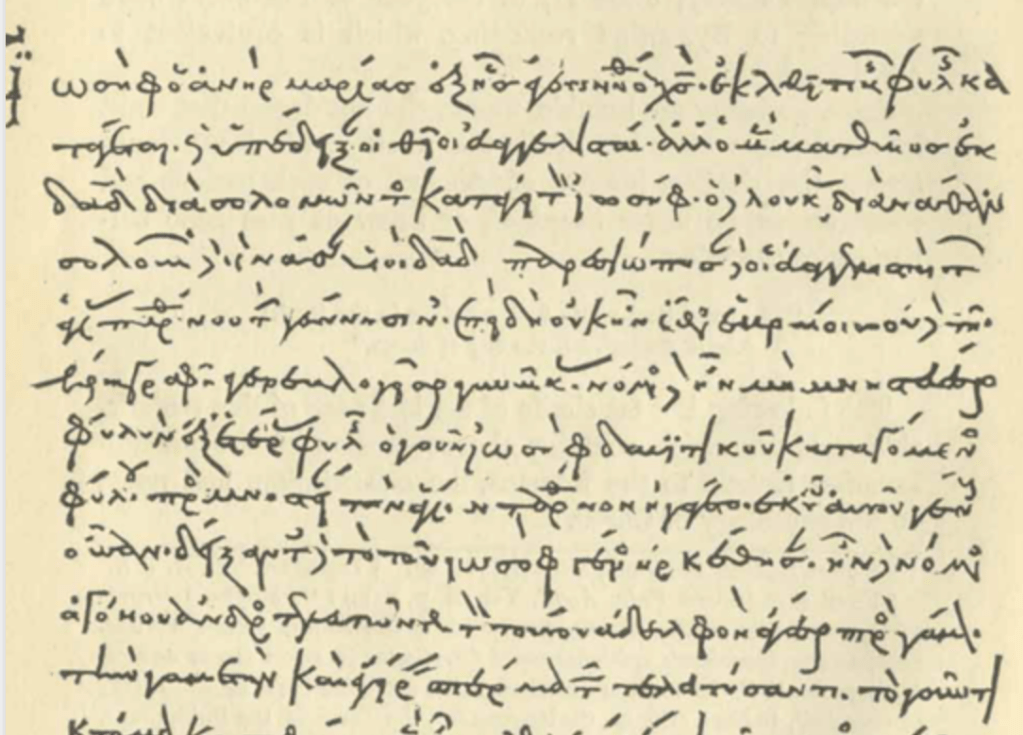
‘Made well’ in Greek is – σῴζω (pronounced sod-zo) – it can be translated as “made well,” in the sense of being healed. But it can also be translated as “saved,” in the sense of being brought through mortal danger. And it can be translated as “made whole,” in the sense of being completed and made to be what you were meant to be all along.
The Samaritan is ‘sodzo’. He’s blessed by being made clean and then when he turns to Jesus to give thanks he’s blessed again: he has been physically healed, but more than that – he has been made whole, he’s come back from the dead, he’s fully alive again. And he can’t help but respond in thanks.
Thanksgiving is such an integral part of the Christian life. Not just politeness, but recognising all we have is gift. Not just in the good times. The psalms are full of prayers of thanksgiving in the midst of troubles and difficulties.
I’d like to tell you the story of a Lutheran pastor named Martin Rinkart
Rinkart served in the German city of Eilenburg during the horrors of the Thirty Years’ War — a time of violence, famine, and plague. In 1637, when the plague swept through the city, he was the only surviving pastor left. That year alone, he conducted over 4,000 funerals, sometimes fifty a day — including the burial of his own wife.

And yet, in the midst of such sorrow, he wrote the hymn “Nun danket alle Gott” (Now thank we all our God) that we still sing today:
Now thank we all our God,
With heart and hands and voices,
Who wondrous things hath done,
In whom His world rejoices;
Who from our mother’s arms
Hath blessed us on our way
With countless gifts of love,
And still is ours today.
Rinkart’s thanksgiving was not naïve. It was defiant faith.
Like the healed leper, he turned back in gratitude — not because life was easy, but because God was still good.
We are not, I hope, going through anything like as grim as the plague in C17th Germany but we do go through times of struggle and hardship. Can we develop lives that have thankfulness at it’s core – an ‘attitude of gratitude’?
Not just because this is known to be good for us, but because it helps to make us more whole.
Social researcher Brene Brown found in her study of people who lived what she calls ‘whole hearted lives’ that:
“without exception, every person I interviewed who described living a joyful life or described themselves as joyful actively practiced gratitude and thanksgiving”[1]
She goes on to say:
“It’s not joy that makes us grateful; it’s gratitude that makes us joyful”.
So let’s embed gratitude into our lives.
Imagine you hare having a meal given by a great friend. Everyone enjoying each others’ company, when there is a pause and someone decides to toast the person who provided the meal and thanks them for all they’ve done to support them over the year. It changes everything doesn’t it. It makes that other person feel seen and valued.
Let’s do this this week. Not just being polite, but really thankful. Find someone we are really grateful for and let them know. Tell them, write them a card, call them on the phone. I assure you it will bring you, and them, joy.
And let us be thankful to God for all the blessings we have in our lives.
We are about to come to the Eucharist meal in just a moment. Eucharist means thanksgiving. When we come to this table we are not just saying ‘thank you’, we are living it.
The Eucharist reorients our lives towards Jesus again. As we share in this thanksgiving meal we, like the thankful leper, are turning towards healing, wholeness and sodza.
End with the words of the hymn:
Now thank we all our God,
With heart and hands and voices,
Who wondrous things hath done,
In whom His world rejoices;
Amen
[1] Brene Brown, Gifts of Imperfection








 Consider the Lilies - Clare Hayns