Written by Alice Freeman, member of the Chapel of Christ Church, Oxford
These prayers were from College Communion (22.1.23), and were so beautiful I thought I’d share them with you…
In this Week of Prayer for Christian Unity we pray first for unity in our hearts – between our purpose and Yours, between our desires and our knowledge of what is right, between our aspirations and our will, between our intentions and our actions.
We pray that we may never set ourselves apart from the world or consider ourselves above others, and yet that we may never be pulled in by the crowd without recourse to our conscience. Instead may we recognise both our smallness in Creation and the greatness of your plan for us as we play our part in our families, in our communities, in our societies, in our nations and in the world as a whole.
Grant us peace in our hearts Lord that we may be strong enough to make peace with our neighbours, to recognise you in even those with whom we cannot agree and find hard to get along with. May we remember that we will find you in the most unexpected places.
While recognising the gravity of the disputes which divide us we pray for unity among Christians, that while standing by our principles we will never cease to question and check ourselves when necessary, and that we will meet other’s points of view not with kneejerk judgement and shrill condemnation but with a calm, tolerant and genuine desire to understand.
We pray for unity among all faiths. Celebrating the beautiful diversity of faith traditions around the world, we pray that religion will become increasingly a force for selflessness, kindness and peace, and not a front for ego, greed, ostracization, abuse and violence.
We offer our prayers for those who profess to have no faith. May all who struggle with religion at least keep faith in the goodness of life itself. Likewise, may religion itself never be an obstruction to faith in the goodness of life. And at our own times of doubt, a simple yet heartfelt prayer offered by a soldier in a trench as a missile flew over his head: “Please God, exist.” And when we still doubt you, may we at least live as though you do exist.
A siphonophore!
Finally we offer our prayers for the whole world – for ourselves, for this Chapel group here in the present moment, for the Cathedral and College of Christ Church, for the Diocese, University and City of Oxford, for our families and friends, for those whom we love, for those whom we struggle to love, for those who are sick, those are have departed, for those who are yet to come, for the 8 billion humans currently living on the planet, and for every being: from the largest elephant on the land, to the longest siphonophore at the depths of the sea, to the tiniest bacteria within our own bodies with whom we may struggle to recognise our unity – may all Creation be well and happy, and manifest Your plan to Your praise and glory.
6 As for me, I am already being poured out as a libation, and the time of my departure has come. 7 I have fought the good fight, I have finished the race, I have kept the faith.
2 Timothy 4.6
It is only because St Paul’s story is so familiar to us that we perhaps forget just how radical it is. Few people have enough humility or self-confidence to abandon beliefs and principles that experience has proven to be wrong. We are all terribly guilty of this. Pride and the opinions of others but, perhaps I think even more powerfully so, our own self-image and perception prevent us from changing that which needs changing. So, rotting away in a prison, deserted by all his friends and neighbours, seen not only as a radical heretic but also as a sell-out, a turncoat, and a traitor, St Paul the former persecutor turned persecuted withered away in flesh.
But something else arises from this, phoenix-like. And that is the Spirit, not of Man, but of God, of the Holy Trinity itself. Because not only does he say with proud conviction that he has finished the race and kept the faith, despite the naysayers, the deserters, the persecutors. He says something which one might easily skip over in the reading:
‘May it not be counted against them’.
2 Timothy 4.16
St Paul perhaps consciously evokes that famous passage of Christ: ‘let he who is without sin cast the first stone’ (John 8.7) and ‘Father, have mercy upon them, for they know not what they are doing’ (Luke 23.34).
Wow. I stand back, in full contemplation of this, and think what a saint, what a man. And yet as I turn to my own life, full of its complications and its multiple ups and downs of varying significance, I ask myself humbly: but could I do it? I think many of us can share this same feeling of awe mixed in with a tint of inadequacy, a sense that such heroism is not for us, but for the famous, the great and the good who walk perceptibly across the stage of life and indeed of Biblical stories.
For those who follow the news and feel often that sinking feeling of despair and of hopelessness, the world as we know it today can feel a very bleak and dark place indeed. We often feel that we are at the mercy of events and of the powers that be; tiny, inconsequential cogs in a faceless machine. We often tend to think that the problems of the world are too great, too complicated, too much effort for us. A standard response might be a slide into cynicism and nihilistic indifference to that which goes on around us.
The parable of the tax collector; with the Pharisee kneeling in front of the altar at centre right and the tax collector standing in the doorway at left; illustration to an unidentified New Testament. c.1551
Or, as we see in today’s Gospel Reading, we may envelop ourselves in the cocoon of proud self-sufficiency and contentedness in self. If the world seems astray, at least I am morally pure and uncorrupted, or at least like the tax collector in our Gospel Reading, more so by comparison with others.
We commit grievous sin and wrong as much by unassuming inaction and by accident than we do by wilful design. The Gospel Reading points to this. The Pharisee does not think as he does by design but by intuition and habit. A man so proud and so smug that it is his habit to look down upon others, to obey the Word of God, but not its Spirit.
What is our path out of the seeming darkness? How can we emulate or approximate to the example of those like Saint Paul? I would suggest Christian resilience. To me, Christianity pursued with a Christian resilience makes sense because it is not the shoestring faith that relies rationalistically upon certain proofs and discovered truths but on the exemplars and injunctions of a wider standard of morality. Not just a philosophy, one might say, but more a way of life. Much composes this Christian resilience, but I shall focus today on Balance, Dutiful Love, and Dutiful Serviceconducted with Humility.
Firstly, the sober, unexciting virtue of Balance. We hear so often as a modern cliché that ‘nature abhors a vacuum’. I dare might add that God too abhors imbalance and excess. The Christian story is one that calls us to look towards the promises of a different, better world whilst remaining firmly planted and daily invested in the earthly world as we presently know it. We are called to be Marthas and not just Marys. We tempt fate and God alike, when we display that unshakeable, devil-may-care dogmatism, in whichever form it may come, that we see in the self-exaltations of the Pharisee. Balance is important.
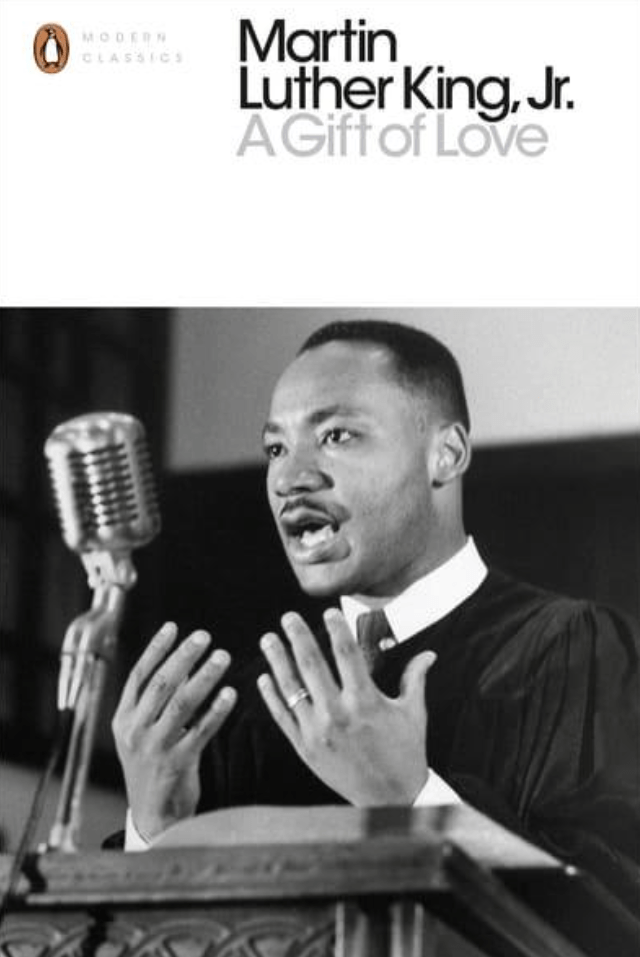
‘Dutiful Love’ – Which brings me onto the next remedy: to see in the face of all the face of Christ. A tough injunction, I readily concede. But not an impossible nor an insurmountable one either. This onward march of goodness, of seeing in the face of Christ the face of all, is one which comes unstuck in even the most do-gooding of Christians when we encounter not the faces of strangers, but the faces of those in our midst. The faces of those who have hurt us, spurned us, oppressed us, who have acted contrary to that higher Spirit which we are called to abide by. Anyone can distribute to strangers, to the unknown faces in our midst. But can we turn the other cheek to those that we know? I read over the summer a wonderful book of sermons by Dr Martin Luther King entitled ‘A Gift of Love’. He preached about how we are commanded to love not just our neighbour, but our enemies too. Yet, and I found this personally quite healing, he pointed out that God did not command or ask us to like our enemies, to like all. It takes tolerance and goodwill to be able to use one’s energies for the positivity of Love, rather than the negativity of Hate and disavowal. It may never translate into a personal like, but we may act dutifully if we confer that peculiar form of Christian Love.
And so, I turn to the final part of Christian Resilience as I see it: a life of Dutiful Service conducted in Humility. This is the dutiful service of one who accepts that they cannot go on always alone. We need one another, we depend on one another – that is not always a comforting thought, nor one entirely appealing either.
At the beginning of this year, I had come out to my friends as a pessimist. But, in one of those paradoxes beloved of a life of Faith, I remain optimistic still. There is a way out of the morass that we see around us. Sadly, it is not instant, it is not cheap, it is not one which can be handed to one and all on a golden plate.
The hope is in ourselves. That may sound inadequate and puny. But God, inscrutable, perplexing, even frustrating as we mortals may find Him, has never worked his way merely through magic spells and lightening flashes, he has imparted to us all the power to act for good, to indeed act at all. The powers lie in our hands, uneasily yes, but there, nevertheless. I personally cannot, like some, wait for someone else to come along to fix what we know and see to be broken. I cannot agree that whatever talents and gifts God has given me can only be used to the pursuit of mere material baubles that glitter only at night.
The question now is whether we are ourselves to take up the mantle, whether we are to make the differences needed, individually or collectively. One of my personal inspirations, the late Queen, famously said on her 21st birthday that:
I declare before you all that my whole life, whether it be long or short, shall be devoted to your service.
Her Majesty the Queen on her 21st birthday, 1947
But, perhaps even more poignantly, she said soon after,
But I shall not have the strength to carry out this resolution alone, unless you join in it with me, as I now invite you to do. God make good my vow and God bless all those who are willing to share in it.
This powerful speech was one of dedication. One which many can agree she lived faithfully to for the rest of her life, long indeed as it was. As I ponder turning 21 soon, I am moved strongly in my own heart to make a similar dedication. But we should not look back fawningly on what a young woman freely committed herself to do and think how wonderful she was because she did it. Because we ignore what Queen Elizabeth’s message also was: an invitation for us to commit ourselves to the service of all, under the auspices of God. The late Queen may have departed, but her message and inspiration of service and duty is one that has been inherited from throughout the ages, stretching right back to the sacrifices of Abraham and forwards to us today.
In devoting ourselves, we show up what Heroic Faith in Action is – it is pursuing the onward march of goodness, whether it be in fashion or not, because to do the right thing is never easy, never straightforward, and oftentimes begs us to wonder if it was ever worth it all. It is not, contrary to popular belief, a binary decision between serving all and serving ourselves. God knows that many compromises will be made – the question is will we remember that there is a purpose beyond getting through to the next day?
Jesus said in today’s Gospel Reading,
all who exalt themselves shall be humbled, but all who humble themselves will be exalted.
Luke 18.14
So, let us pour ourselves out like libations, let us never waver, never despair, never fear. We may not get, like Moses, to the Promised Land. But if we act with Christian resilience against all that earthly struggles might throw at us, then as Eliza says in the Hamilton play, ‘that would be enough’. Then, when the day finally comes, we may say in earnestness with St Paul,
‘I have fought the good fight, I have finished the race, I have kept the faith’.
When the queen of Sheba heard of the fame of Solomon, she came to Jerusalem to test him with hard questions… When she came to Solomon, she discussed with him all that was on her mind. Solomon answered all her questions.
2 Chronicles 9.1
The Queen of Sheba is a woman of myths and legend, depicted in operas and on canvas. She’s known as Makeda in Ethiopian tradition, and as Bilquis in Islamic tradition. It is thought her country is what we would know as modern-day Yemen, and she went on a journey of between 3-7 years to Jerusalem to seek the wisdom of Solomon.
It seems fitting to have the story of the Queen of Sheba at Freshers’ Evensong. This story of a woman who leaves her homeland and her people to travel across the world in search of knowledge and wisdom.
In the past few days, I’ve met people from all corners of the globe and nation. It’s been a joy to see the diversity of cultures, languages and backgrounds that have gathered in this place over the past week.
Those of you who are new here will have journeyed here, perhaps for similar reasons to the Queen of Sheba: to test your tutors with hard questions, to find out more about your subject, the world, and yourselves.
There is a proverb in the bible that speaks of wisdom as something to be pursued above all things. ‘wisdom’ is personified as a woman, ’lady wisdom’,
Get wisdom, get understanding.. and she will protect you; love her, and she will watch over you. Wisdom is supreme; therefore get wisdom. Though it cost all you have, get understanding
Proverbs 4. 5-9
There is a difference between knowledge and wisdom though isn’t there? Someone said ‘knowledge is knowing that a tomato is a fruit; wisdom is not putting it in a fruit salad’!
Knowledge can be gained through reading, research, and gathering information; but wisdom uses discernment, judgment and understanding to take this information and use it for good.
I often marvel at how the cleverest of people can make the most foolish decisions at times!
CS Lewis said in a letter, ‘The first kernel of wisdom to start with is to let our dependence and trust in God permeate all our worries of today’ 1
So, here are three simple things to keep in mind as you begin your time here, or as you begin your academic year.
Firstly, seek wisdom, not just knowledge. All your questions are unlikely to be answered in just three or four years; but be willing to be transformed, and changed by your experience here. Keep an open mind and an open heart.
Secondly, the Queen of Sheba didn’t set off on her own, she had a retinue, a caravan of people alongside her to support her. We need one another. There will be times when the journey is rocky and the wheels on our proverbial chariots fall off. We need to look out for one another, support one another, and care for one another. That’s the joy of being part of a community like Christ Church.
Thirdly, and most importantly, the Queen of Sheba saw that all the wisdom and gifts Solomon had were because they’d been given to him by God.
God is with you, whether you are just starting out, or mid-way through, whether you are full of faith, barely holding on to faith, or have no faith at all. Let this knowledge permeate our current worries, as CS Lewis said.
Christ Church Cathedral
And remember that this Chapel, Cathedral, this house of prayer is a place that people have traveled to and prayed in for over 1000 years; and it is a place for you to come into whenever you like, to sit, to pray, to think, to question, to be inspired.
So bless you as you begin your time here and I hope that you, like the Queen of Sheba, find what you’re seeking, and that you have a lot of fun along the way, knowing that God is with you throughout it all.
It’s a privilege to be able to speak to you at the end of this academic year, especially to those of you leaving us to move on to pastures new.
I begin with a story.
In the 14th Century, there was a monk called Brother Bernard who lived in a monastic community. Every day when he left his house an old man in rags stood outside the door and shouted the same two questions to him.
Who are you? Where are you going?
After several months one of the other monks asked Brother Bernard if he wanted something done about the old man. He could be moved on.
Not at all, said Brother Bernard. I pay him in bread to be here every morning to ask me those very questions.
Who are you?
Where are you going?
In your time at Christ Church, you will have been asked and been examined on many and various complex questions. You will have struggled through problem sheets, dissertations, tutes, and submitted thousands of words.
But these two simple questions are crucial and we forget to ask them at our peril.
Who are you? Oxford student, Christ Church member, medic/historian, etc, gifted at xxx, lover of xxxx, feels fully alive when xxxx (Fill in the blanks)
Also, fallible, weak, vulnerable. pretty useless at xxx, addicted to xxxx, struggles with xxxx (Fill in the blanks)
Where are you going?
Not just what job are you going off to do. Or what internship will you join. Where are you going?
What is it that propels you out of your door in the morning? What is it that fires you, that fills you with life, or joy? Or what is it that fills you with rage or frustration at injustice so much so that you can’t help but speak out.
You may not know yet, but I’d like to suggest that this is a question to keep asking yourself.
Our first reading from Numbers is of a story rarely heard in Church, and is of a group of women who have inspired me over the past couple of years.
Mahlan, Noah, Hoglah, Milcah and Tirzah, the five daughters of Zelophehad.
Their father had died and as this period of history was a classic patriarchal society, all the land belonging to his clan was to be passed to another clan.
And the daughters decided this wasn’t good enough. So they joined together and went to the tent of Moses and the elders. And they argued their case.
‘why should the name of our father be taken away from his clan because he had no son?’
Numbers 27.4
Moses didn’t know what to do. So he prayed.
The Lord said: ‘the daughters of Zelophehad are right in what they are saying; you shall indeed let them possess an inheritance’.
Numbers 27.7
And this transformed women’s land rights for generations of women to follow them.
They knew who they were and where they were going. And they were not afraid to rise up and speak up. What is it that makes you rise up and go the tent of Moses, as it were?
There is much to rise up about isn’t there.
Environmental issues
Racial or LGBTQ or disability inclusion
Integrity in public life
But we don’t do any of this on our own. The daughters of Zelophehad would not have been heard alone. They needed one another.
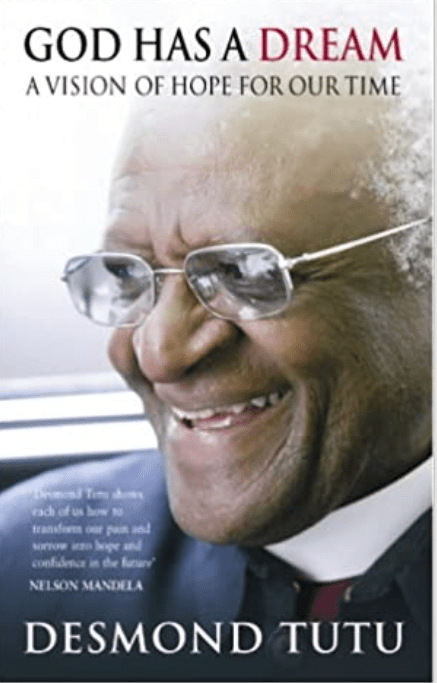
Archbishop Desmond Tutu died this year. In his book God Has A Dream, he speaks of God who calls people to join in with the work of justice and peace.
All over this magnificent world God calls us to extend His kingdom of shalom-peace and wholeness — of justice, of goodness, of compassion, of caring, of sharing, of laughter, of joy, of reconciliation. God is transfiguring the world right this very moment through us because God believes in us and because God loves us. What can separate us from the love of God? Nothing. Absolutely nothing. And as we share God’s love with our brothers and sisters, God’s other children, there is no tyrant who can resist us, no opposition that cannot be ended, no hunger that cannot be fed, no wound that cannot be healed, no hatred that cannot be turned into love, no dream that cannot be fulfilled’
Archbishop Desmond Tutu. God Has a Dream
Who are you?
The most important aspect of who we are is we are people loved by God. Nothing can separate us from that love.
If you remember nothing else from what I say today remember that. You are loved. Not because you are clever, or you’ve got a degree result that you’re proud of, or even because you have unique gifts you hope to use for the good of the world.
You are loved just because God is a God of Grace
And so where are you going? Well, in some ways that’s a mystery.
But if you hold as a guide a desire that wherever it is you go you extend God’s realm of love, justice, goodness, compassion, caring, sharing, laughter and joy. That’s a pretty good guide for the journey.
And you do that with the blessing of this community of Christ Church.
Desmond Tutu also used to quote a Xhousa word, which is what I’d like to leave you with.
VUKUZENZELE
It means, ‘Get up and do it’
VUKUZENZELE
And so ‘get up and do it’, and do so with all our love and our blessing.
I seem to have signed up to run the MK Half Marathon which is on 2nd May (it seemed a good idea at the time!) and could do with some support to keep me going.
The aim is to finish it, and to raise some funds for a good cause.
ZANE supports many vulnerable people in Zimbabwe, and I’m running to support the wonderful work of the team in Harare, which empowers women who have suffered from violence, trauma, and abuse. The project empowers and equips them through creative therapy and education programmes.
Thanks for taking the time to visit my JustGiving page.
Donating through JustGiving is simple, fast and totally secure. Your details are safe with JustGiving – they’ll never sell them on or send unwanted emails. Once you donate, they’ll send your money directly to the charity. So it’s the most efficient way to donate – saving time and cutting costs for the charity.
On this day where we celebrate International Women’s Day, I’d like to remember the wonderful women of the Old Testament who have accompanied me over the past few years as I worked on our book ‘Unveiled’. Seeing them listed in this way reminds me that God has been working through wonderful women for centuries, and continues to do so.
These women remind us:
Eve, that we all stuff up, but God has a plan; Hagar, that outsiders are seen and heard by God; Sarah, that dreams can come true even when we feel past it. Lot’s Wife, that women are fleeing from their homes because of war right now. Rebekah, that parenting is difficult and it’s OK if we get it wrong; Rachel, that even being loved by a man is sometimes not enough; Leah, that it’s really tough when we feel marginalised and unnoticed. Dinah, that women aren’t defined by the worst thing a man did to them. Potiphar’s Wife, that God can work through sexy women; Tamar, that sometimes it’s best to push forward and demand to be noticed; Shiprah and Puah, that civil disobedience can sometimes save lives; Jochebed, that we should never give up hope; Miriam, that there is always time to dance and sing with joy. Mahlan, Noah, Hoglah, Milcah and Tirzah (the daughters of Zelophehad), that sometimes when you speak up against injustice, change happens. Rahab, that the genealogy of Jesus names a prostitute and so no one is ‘not good enough’; Ruth, that at times friendship is the most precious thing in life; Naomi, that even the most bitter and bereaved can be restored to wholeness. Deborah, that at times we need to listen to the wise women in our community; Jael, that some women have to take up arms and fight for freedom; The First Mrs Samson, that marriage really isn’t the best option for some women; Delilah, that power isn’t always about being strong. Jephthah’s Daughter, that sometimes the people we love the most can hurt and harm us; Bathsheba, that women are too often shamed and blamed for men’s actions; Hannah, that our prayers from the heart are heard. Michal, that love isn’t static and can change over time; Abigail, that many women today are keeping the peace between feuding men; Rizpah, that warfare leads to too many grieving mothers; The Medium of Endor, that just because you can do something doesn’t mean you should; Queen Vashti, that saying ‘no’ to powerful men is costly; Esther, that sometimes we’re in just the right place at the right time. Abishag, that even the most lowly of jobs can be important; Jezebel, that our reputations don’t define us; Huldah, that at times telling the truth means giving ‘bad news’; Suzannah, that some women aren’t believed when they tell the truth; Queen of Sheba, that seeking knowledge is a good thing. The widow of Zarephath, that being generous with little can lead to abundant blessing; Naaman’s maidservant, that the courage of the smallest can have profound consequences; Athalia, that not all women have redeeming qualities, and that’s OK; The Shunamite Woman, that at times we have to be feisty to fight for those we love; And finally, Shallum’s daughters, that women are always part of the story, even if they’re not named or remembered by our history books.
We are delighted to share the news that BRF (Bible Reading Fellowship) has worked with us to produce eight videos to accompany our book Unveiled: women of the Old Testament and the choices they made. These will be available from March 2022 with accompanying resource material. Each video will be released weekly from March 3rd.
Each video will be around 5 minutes each and there will be downloadable questions to aid discussion groups.
We are delighted to announce that our book ‘Unveiled: women of the Old Testament and the choices they made’ will be in UK shops this Friday 22nd October.
We’re really happy with the beautiful design and lay out and can’t thank BRF enough for all their help in taking this forward and turning it from a dream to a reality.
Micah has worked really hard to create 40 original paintings and drawings which bring out the character and emotion of each of the women. Each one is unique and all of them are different to the images he created for the Lent 2020 blog. We would love the opportunity to talk about the book and display (and sell) the artwork and so if you are interested/have ideas then please get in touch (haynsclare@gmail.com).
We really hope you will support us by buying copies, recommending them to your friends, and spreading the word. It all started here on this blog and so we can’t thank you enough for your support. They should be in all major bookshops and outlets from Friday. If you live near a small local bookshop, perhaps you could encourage them to stock the book!










 Consider the Lilies - Clare Hayns