


A sermon for the 4th Sunday of Easter at College Communion, Christ Church
Given by Darian Murray-Griffiths, History and Politics
30th April 2023
Lord, hear me and inspire me, that I may be ever faithful to your service. In the name of the Father, the Son, and the Holy Spirit. Amen
In today’s Gospel Reading, Jesus presents himself as the Good Shepherd tending his flock. He tells his confused disciples and listeners that:
I am the gate. Whoever enters by me will be saved and will come in and go out and find pasture.
John 10.9
St John tells us that ‘Jesus used this figure of speech with them, but they did not understand what he was saying to them’ (John 10.7). And, 2000 years later, we may equally find ourselves compelled to re-read and re-understand this passage. I remember in this very Cathedral hearing a priest preaching that Jesus positioned himself in direct contrast to shepherds throughout the ages who loved and tended their flock out of pure self-interest. A well-tended flock, fattened and healthy, make for the best meats that the shepherd will eventually sell or consume himself.
Jesus here is the Good Shepherd, the antithetical Shepherd, who cares for us so much that he willingly took upon himself the burden of the Cross.
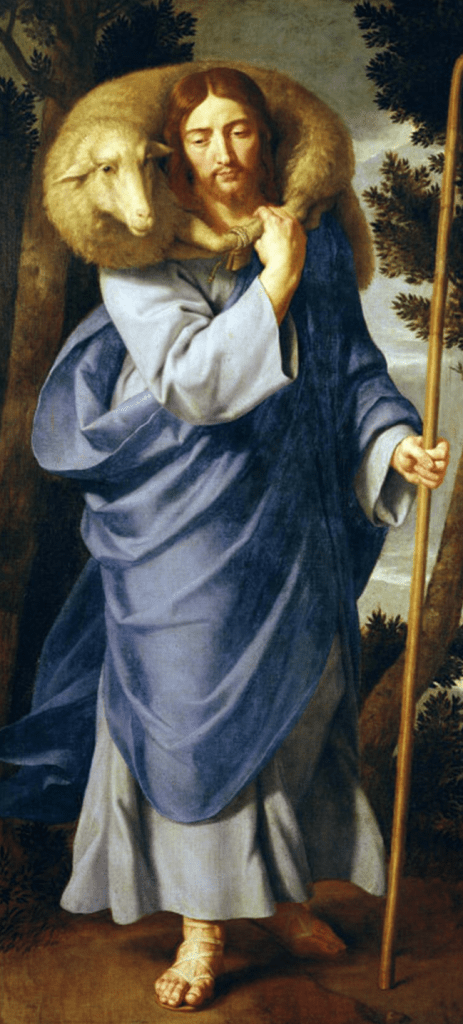
The man who preached sociability and charity was instead condemned to being the centrepiece in a spectacle of public entertainment, where masses were drawn together not by love or goodwill but by the desire for cheap entertainment, obedience to the naked display of authority, and the mindless contemplation of that thing they called ‘justice’. That burden Christ took upon himself is one which countless Christians, in varying circumstances and ages, have also taken upon themselves ever since. And one which rightly should inspire us today in our struggles, and stall aggressors to check themselves in their volleys of scepticism.
Truly, Jesus was the Good Shepherd, who in his moment of truth, decided to sacrifice not his flock, but himself. He decided not to sell out or cash in, but to accept his fate, so that we may be saved. It is a decision that two millennia has perhaps dulled in our minds in the constancy of its retelling.
In this Gospel Reading, we see Jesus at pains to intervene against the odds, to disrupt the cycle of human vanities and natural instincts, and to interpose in its place a new conception of life. Jesus says to his audience words which are profound: ‘I came that they may have life and have it abundantly’ (John 10.10)
I do not see this as Jesus simply saying that he saves us from Death or at least the early grave. I see this as something which I hear every time at Evensong in this Cathedral and stirs and reinforces me personally: he is talking about: ‘that peace which the world cannot give’ (John 14.27). In talking of not just life, but a life in abundance, Jesus is talking about the way in which life itself does not solely have to be a dreary march from pillar to post, from resting point to resting point, or even, for us students, from bed to library.
He talks of life as a grander thing to be lived, if only we may halt ourselves in our tracks, and calmly contemplate. He bids us to stop up the fears and vanities, the half-truths we tell ourselves, and the arrogant presumptions we cling on to for matters of prestige and hierarchical self-assertiveness. He bids us, in short, not to live half-lives. To be, as I have long told friends, ‘our true best selves’. Indeed, that abundancy of life comes not from licence or delinquency or selfish abandon, but from the moral abundancy that we may find in the wisdom of Christ’s teachings.
This is, as I have said in a previous sermon, not just a philosophy, but a way of life. And what is this way of life? Well, we see in our first reading today, the utopian vision that Jesus inspired the early Christians with: one where meals are eaten together, and people are charitable. What a lovely vision. All are gathered together, achieving that value which has eternally escaped and passed by many generations: happiness; true, long-lasting happiness. Joy found not in having conquered the world but having conquered some part of themselves. Joy found not in extravagance, but in simplicity.
Note that the circularity of life and death, of struggle and sacrifice, or of hardship and want, has not disappeared. But their centrality to life has. God has not promised an end to all struggles. But God has promised, I think, something greater and more difficult to accept: that we do not have to face our battles alone. That we are loved, despite all our weaknesses, and failures, and frailties. And that we do not have to retreat from the world in order to prosper in it.
The Christian spirit and message do not promise us a free lunch. It asks of us something which has failed many before us, many now, and, I have little doubt, many in the future. It demands of us vigilance, perseverance. And, above all else, courage. The courage not just of bravery in the field, but of a moral courage. Today, that courage is needed. The late Queen, who as many of you know is a source of very deep inspiration to me, in 1957 said:
Today, we need a special kind of courage, not the kind needed in battle but a kind which makes us stand up for everything that we know is right…We need the kind of courage that can withstand the subtle corruption of the cynics.
Queen Elizabeth 11
We are often the makers of our own miracles, but it is the spirit and drive we are given by God, amongst others, which will drive us forward to conquer our demons, overcome our obstacles, and live fuller lives. It is a daunting challenge, but it is one that we should accept. God is not simply the dispenser of good and evil, to be embraced or rejected as the fortunes of our lives vary. Often, God is something we cannot always necessarily discern.

And life itself may very well feel like a country driver facing intermittent weather, where the satnav has died. We may feel that God is like the radio signal, coming in with great éclat, going out with a drivel of quiet, faltering noise. We may curse it. We may dance melodiously to it. But there the radio is still. On this country drive, we would never blame ourselves for the quality or our skill. But blame others. It is by far the easier thing to do. We may stress ourselves out, fearing we shall never reach the intended destination. And in the great fire of our stress and our anger, we may fail to see the beauties of the green fields and new sights that we behold. Sometimes, in the great heat of our struggle to find our way out of the morass, we may need to apply gentle pressure to the brakes. We may even need to do that thing which any competent driver may dread, for fear of looking weak or inexperienced: we may need to pull over. We may need, in fact, to recalibrate and be still. Be still. And discern God in the distances striding to our rescue. We may need that space to discern him better by actively letting go of our struggles and our anxieties, and allowing him to take over, to direct us, to steer us, to embrace us. We may then get back on with our drive. Later, we may even try and erase that memory of when we needed help, perhaps through embarrassment, but God will not judge harshly, he will not reject us like the spurned lover.
What I’m trying to say is that the Christian faith, indeed life itself, requires vigilance on our part. I know this because I too, despite outward appearances, have found God, in the end, to be the most reliable of constants in this abased world. I have learnt harshly what it means to be alone or to feel abandoned by the passing forces of this earth, and to have felt as if I alone can fix things. I have sometimes even tried to deny God by inserting myself in His place, the mover and shaker of all things. But, as my young life has stretched out before me and maturity has dawned, I have accepted what is hard to accept for any proud or just human person: that there are some things which we need help on, some others whom we must turn to. And I am so very grateful to have such great friends who have helped me to realise this and be there for me.
Like the country driver when things are going wrong, it is the very act of acceptance and confident belief that has improved and shaped me, even rescued me from others and from myself, as with so many others.
Churchill once mused about whether history only teaches us the constant of the unteachability of Man. Well, perhaps he had a point. How many times have we, have I, trusted in those things which are not stable or durable: in the fool’s gold and decomposing promises of fellow beings, of fitness quick fixes, or of moonshine mercurial manifestoes of eternal ease and minimal effort. Amidst it all, though He may at times be hard to discern, I have found myself trusting in God. It has taken time, sometimes too much time for my liking, to find out what He has in store for me. He often gave me the most unexpected of boosts, as well as of lows. But He reassured me that right would come through.
And in that process, I became imbued with that thing rarer than hope: confidence. Confidence not just in the Church or society, but even rarer, in myself. It may falter at times, but it has derived from the rock and refuge of Christ, not the shifting sands of Man or of man-made structures.
So, what was Christ, the supposed Good Shepherd, saving us from? Was it war or strife? Possibly. But I think the Good Shepherd saved us from something far worse: he saved us from ourselves. If we choose to follow the teachings of this mighty faith, we are offered the chance of ourselves reborn and resurrected.
As you may have gathered from this morning’s sermon, religion (like many other things) is not just philosophy, not just a way of life either. Religion is psychology too, I think. The questions of life: how we might better ourselves, how we might better others, how we might save ourselves from despair and cynical fatalism, how we might trust that things might turn out okay. All are met in the empty tomb of Christ resurrected.
Throughout all the challenges and changes of life, not all bad, not all good, I have come to a stage where, thanks to the confidence I have in the teachings and bolstering support of the Christian religion, I too may say in the words of Pilgrim’s Progress:
and though with great difficulty I am got hither, yet now I do not repent me of all the trouble I have been at to arrive where I am. My sword I give to him that shall succeed me in my pilgrimage and my courage and skill to him that can get it. My marks and scars I carry with me, to be a witness for me that I have fought his battles who now will be my rewarder.
John Bunyan, Pilgrim’s Progress
Now, for many of us, a term of great momentousness beckons. It shall not be easy. And at times we may feel that we are incapable or unworthy of the challenge. I pray for you all daily that you may find time, like the country driver, to accept that we are not alone, that we are not helpless, and that, though great difficulties may attend us, we shall reap fully our rewards. Things will come aright! But, to do all this, one needs constancy, vigilance, perseverance. That is not just the foundation of hope, but indeed of confidence, self-confidence, too.
I have found that trusting in God has led more and more to trusting in self. That God-given confidence I pray you may all find in your own way and in your own time. In the tranquil calm of this Cathedral, where a thousand ancient stones tell their own stories of countless peoples’ struggles and battles, I pray too that you may find truly what Christ promised: that peace which the world cannot give. Amen.
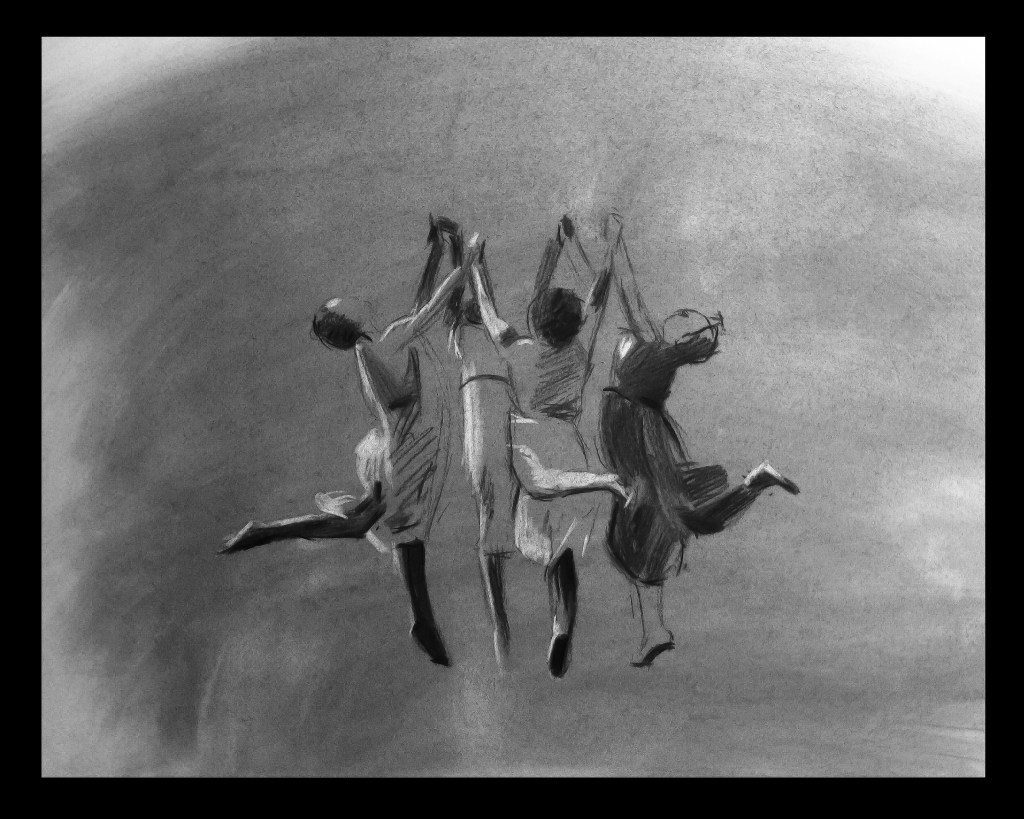
 Consider the Lilies - Clare Hayns