
A sermon at College Communion given by Monty Powell, an undergraduate in French and German at Christ Christ – 29th January 2023
4th Sunday of Epiphany
Readings:
1 Kings 17: 8-16
John 2: 1-11
‘Nelly, do you never dream queer dreams?’, Catherine said, suddenly.
‘Yes, now and then’, I answered.
‘So do I. I’ve dreamt in my life dreams that have stayed with me ever after, and changed my ideas; they’ve gone through and through me, like wine through water, and altered the colour of my mind.’
I always quite enjoy the little stories or anecdotes which you often find at the start of sermons. Now, I do, though, have a story about one late evening last term when a couple of friends and I here in college did actually run out of wine. Just like – I am sure – all the guests at the wedding in Cana, I was, at first, rather annoyed by this, and wished I had bought some more – but I’m not sure my story quite fits, largely because – and for reasons I probably don’t need to go into with you today – it probably turned out to be for the best that we didn’t have any more…
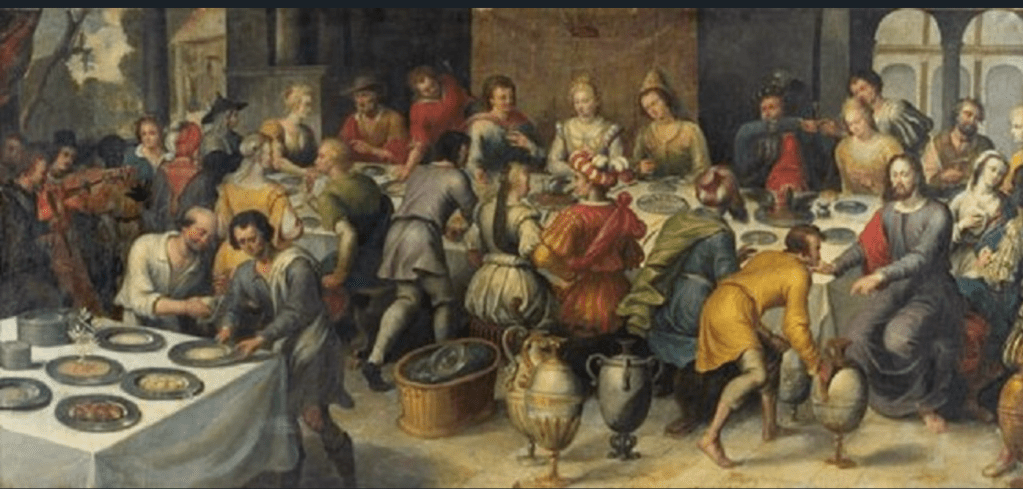
In today’s Gospel, Jesus, on the other hand, seems at first to take the opposite view. When his mother says to him: ‘they have no wine’, Jesus replies that this has nothing to do with him or her; that his hour is not yet come.
I find it quite puzzling that Mary takes absolutely no notice of Jesus’ response at all. Instead, straight away she orders the servants to do whatsoever he tells them. It seems, then, that Mary is convinced that Jesus will help her; sure in her expectation that Jesus as the Son of God will just magic up a few more barrels of wine for her so as to avoid disappointing the guests. But this isn’t quite what happens.
When Rowan Atkinson parodied this story in a rather funny sketch, he makes Jesus out to have been some sort of entertainer – playing to a crowd which goes wild after they witness his supernatural powers of turning the water into wine. Perhaps something like this is what Mary expected of Jesus too.
And yet, the Gospel gives us something rather different. You’ll have noticed that John never describes the moment at which the change from water into wine happens; and neither the servants nor Mary nor even Jesus himself ever acknowledge it.
According to John, Jesus carried out seven signs on Earth. Whilst turning the water into wine is the first of these seven, in the final sign, Jesus raises Lazarus from the dead in front of a great crowd. That is the story in which we are confronted by what the late Pope Benedict XVI termed Christ’s ‘absolute power over life and death’.
Here, though, there is no great crowd, no great revelation of Christ’s divinity in front of all and sundry. Instead, the Ruler of the Feast ‘knew not whence the wine came’; and, as far as we know, he never did find out. He believes, erroneously, that it was the bridegroom who saved the best wine until last.
It seems to me that this quietly reveals something about the way God works in the world.
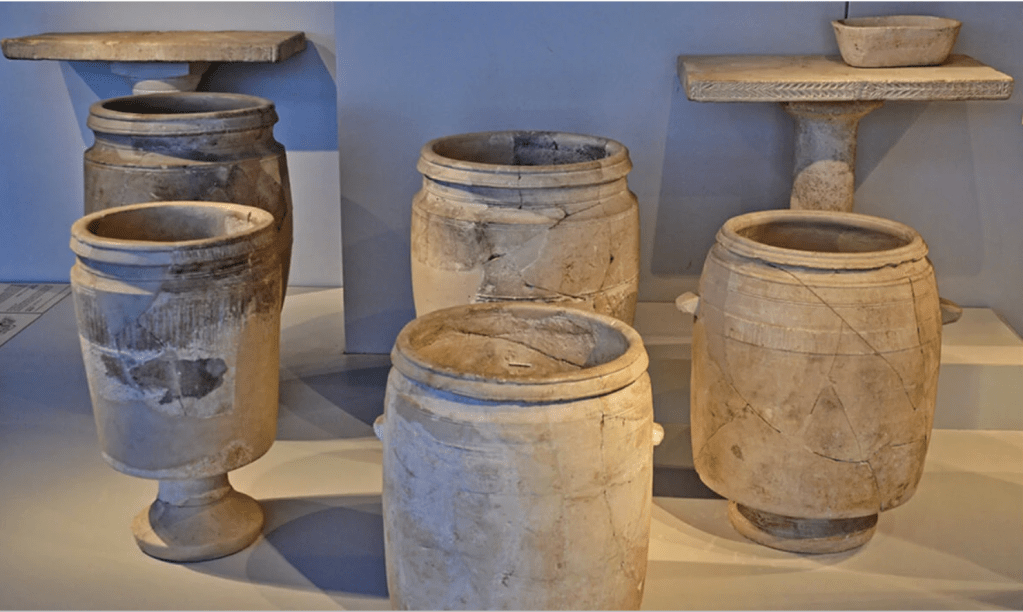
One commentator writes that the real miracle here isn’t that Jesus turns the water into wine, but that the servants listen to his orders. After filling up these great stone pots with a hundred gallons of water or more, they bring them up to the steward of the feast. I think that the servants show a surprisingly great deal of trust in Jesus by doing this. Not only do they carry out quite an arduous task, but also run the rather mortifying risk of telling the ruler of the feast that that which was and should still be – from a material, objective perspective – water, is now wine.
I think this tells us about the way God works on earth because – just like the ruler of the feast, who knows not whence the wine came – we rarely notice him, all too distracted by work and stress and technology for us to perceive, never mind be grateful for, his presence. We might call out to God – like Mary does to Jesus here – when we think we need Him, as I certainly have done, but that doesn’t mean a response will come straight away or in the form we expect. It is, instead, the servants who are attentive to and place great trust in Jesus’ words who make this miracle possible.
I began with a quote from Emily Brontë’s novel Wuthering Heights. If you’ve read it, you might think this a somewhat strange choice – it certainly isn’t the most ‘Christian’ novel around – but I really like this image in particular.
The Gospel verse just before the story of the wedding tells that we shall see Heaven open, and the angels of God ascending and descending (John 1.51). As Tom Wright puts it, in the wine which Christ has transformed, heaven and earth intersect.
Like the wine which pours out of Catherine’s dreams into the watery materiality of her existence, so the wine which Jesus brings to the feast, is a sign of God’s presence in a world that is all too often tasteless and insipid, if not downright bitter. This presence might be secluded and hidden from us when we are not attentive to it, as I know I rarely am, but it is ready to be felt when we are; just as the servants were.

We’re increasingly living in a world where giving this attention to God can seem almost impossible, as technology fills our every waking moment and more and more of our nights with the flickers and sounds of distraction – and that’s if we even want to do so. A couple of years ago, there was a documentary on TV about a trappist monastery near Loughborough (Brotherhood: the inner life of monks). Something which has stayed with me ever since are the words of one of the older monks: that, when we strip away all of the racing thoughts and distractions of daily life and are left with nothing but silence; that’s where God is. Perhaps, that’s where the wine is.
And why Wine? In a few moments we will all be invited to partake in Holy Communion, a foretaste of wine of that other life which Christ, as he raises Lazarus from the dead, promises to us.
It’s a promise of fullness and wonder, and one in which we should rejoice. As one commentator put it: ‘Jesus did not multiply vinegar at a funeral’.


As I’m stuck in hospital with my leg in traction and unable to move and do all those busy things I usually do to distract myself from things, I was particularly struck by the words ;
“Something which has stayed with me ever since are the words of one of the older monks: that, when we strip away all of the racing thoughts and distractions of daily life and are left with nothing but silence; that’s where God is. Perhaps, that’s where the wine is”
Maybe a good time to practice. A enforced lesson is still a lesson!
LikeLiked by 1 person
Thanks so much Clare. A gre
LikeLiked by 1 person